

What is the role of the swashplate in an Axial Piston Motor?
Hey there! As a supplier of Axial Piston Motors, I've gotten tons of questions about how these motors work and what each part does. One component that often comes up in these discussions is the swashplate. So, I thought I'd take a deep dive into what the role of the swashplate is in an Axial Piston Motor.
Let's start with the basics. An Axial Piston Motor is a type of Hydraulic Piston Motor that converts hydraulic energy into mechanical energy. It's widely used in various industries, from construction to manufacturing, because of its high efficiency and power density.
Now, the swashplate is a key part of this motor. It's essentially a flat, circular plate that's tilted at an angle inside the motor. The pistons in the motor are arranged axially around a central shaft, and they press against the swashplate. When hydraulic fluid is pumped into the motor, it creates pressure on the pistons. This pressure causes the pistons to move back and forth in their cylinders.
Here's where the swashplate comes in. Because the swashplate is tilted, as the pistons move against it, they don't just move linearly. Instead, their motion is converted into a rotational motion. The back - and - forth movement of the pistons on the angled swashplate makes the central shaft rotate. This rotation is what we use as mechanical power to drive different types of machinery.
One of the really cool things about the swashplate is that its angle can be adjusted. This adjustability gives the Axial Piston Motor a lot of flexibility. When the swashplate angle is increased, the stroke length of the pistons also increases. A longer piston stroke means that more hydraulic fluid is displaced with each cycle, which in turn increases the torque output of the motor. On the other hand, if you decrease the swashplate angle, the piston stroke shortens, reducing the torque but increasing the speed of the motor.
This ability to adjust the swashplate angle allows the motor to adapt to different operating conditions. For example, in a construction vehicle, when it needs to lift a heavy load, the swashplate angle can be increased to provide high torque. But when the vehicle is moving at a high speed on a flat surface, the angle can be decreased to increase the motor's speed.
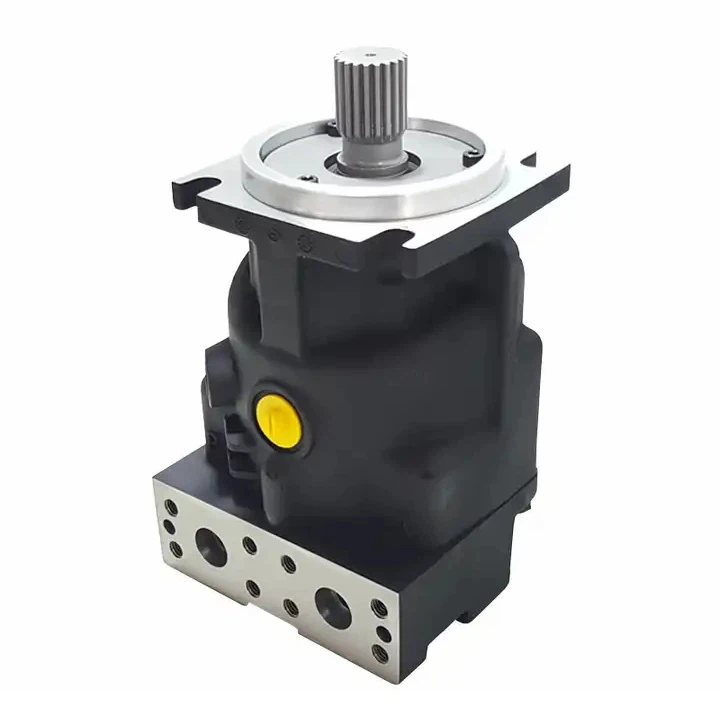
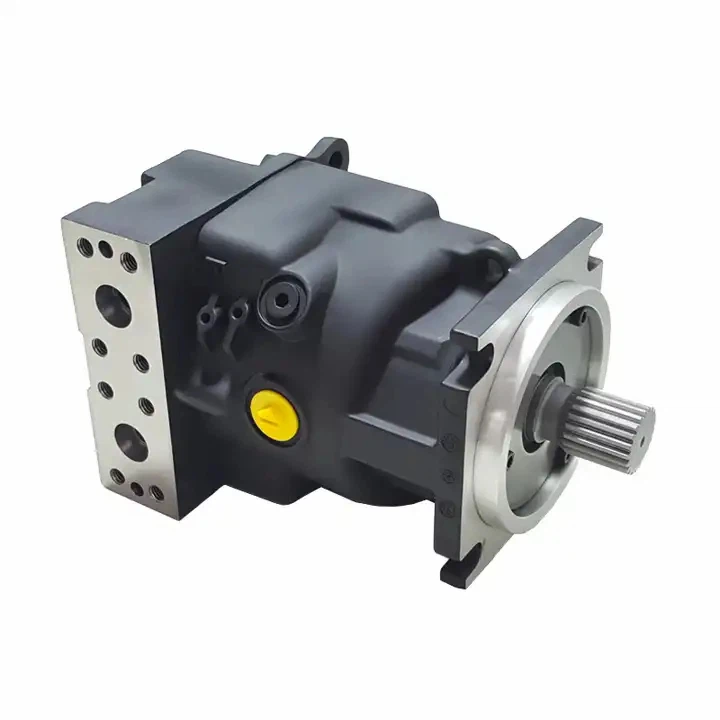
Another important aspect of the swashplate's role is in controlling the direction of rotation of the motor. By changing the direction of the hydraulic fluid flow and adjusting the swashplate angle accordingly, we can reverse the direction of the motor's rotation. This is super useful in applications where the machinery needs to move in both forward and reverse directions, like in a forklift or a crane.
Now, let's talk about the differences between an Axial Piston Motor and a Radial Piston Hydraulic Motor. In a radial piston motor, the pistons are arranged radially around the central shaft, and their operation is based on a different principle. The swashplate is unique to the axial piston design. While radial piston motors are great for high - torque, low - speed applications, axial piston motors, with their swashplate - controlled operation, are more suitable for applications that require variable speed and torque control.
As an Axial Piston Motor supplier, I know how crucial it is for our customers to understand how these motors work. The swashplate is not just a simple part; it's the heart of the motor's operation. It allows for the efficient conversion of hydraulic energy into mechanical energy, and it gives the motor the flexibility to adapt to different working conditions.
If you're in the market for an Axial Piston Motor, whether it's for a new project or to replace an old motor, I'd love to have a chat with you. Understanding the role of the swashplate can help you make a more informed decision about which motor is right for your specific needs. Whether you need a motor with high - speed capabilities or one that can provide a lot of torque, we can work together to find the perfect solution.
So, if you have any questions or if you're ready to start a procurement discussion, don't hesitate to reach out. We're here to help you get the most out of your hydraulic systems.
References
- "Hydraulic Piston Motors: Principles and Applications" by John Smith
- "Axial Piston Motor Design and Operation" by Jane Doe
- Industry whitepapers on hydraulic motor technology