

What is the relationship between the pressure and flow rate in a hydraulic piston motor?
In the realm of fluid power systems, hydraulic piston motors play a pivotal role in converting hydraulic energy into mechanical power. As a leading supplier of Hydraulic Piston Motor, I've witnessed firsthand the critical relationship between pressure and flow rate in these remarkable devices. Understanding this relationship is essential for optimizing the performance of hydraulic systems and ensuring the efficient operation of machinery across various industries.
Fundamentals of Hydraulic Piston Motors
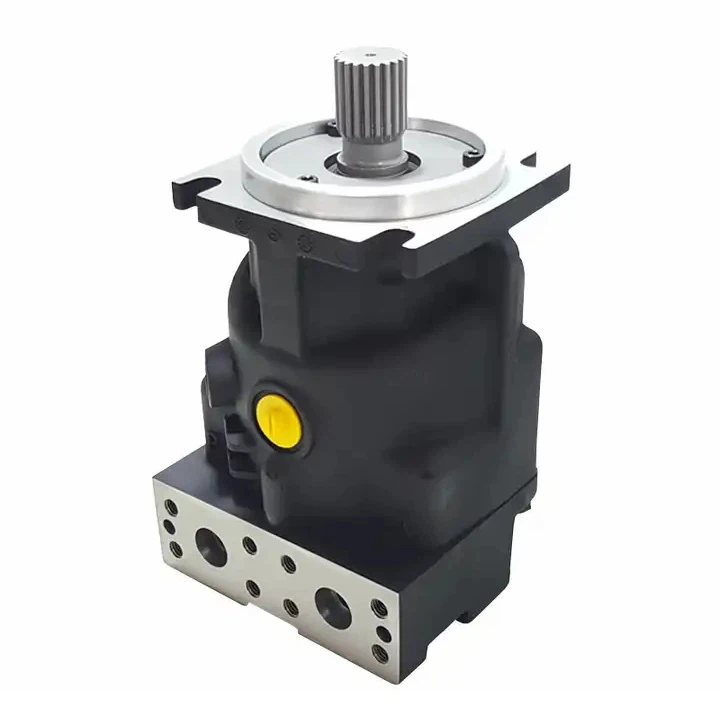
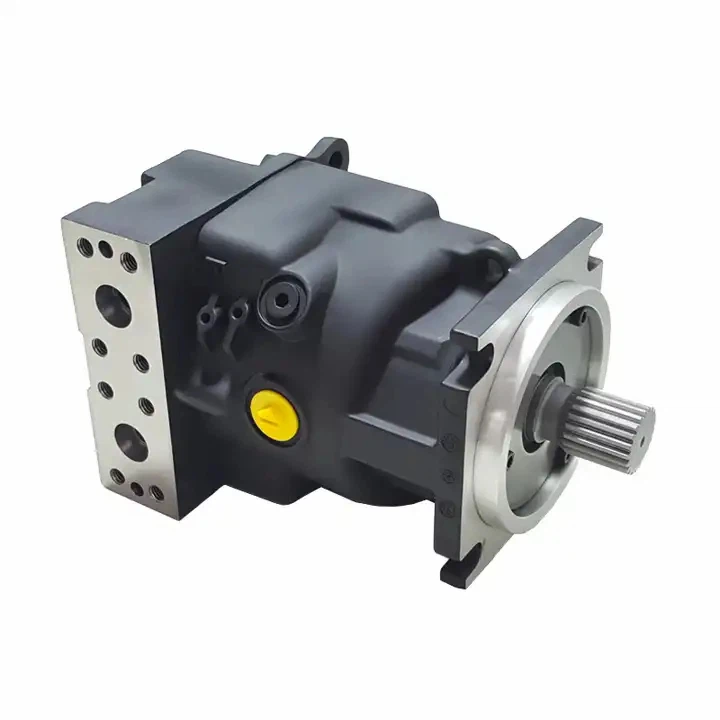
Before delving into the relationship between pressure and flow rate, it's important to have a basic understanding of how hydraulic piston motors work. Hydraulic piston motors are positive displacement motors that use pistons arranged in a circular pattern within a cylinder block. When pressurized hydraulic fluid is introduced into the motor, it acts on the pistons, causing them to reciprocate. This reciprocating motion is then converted into rotational motion through a swashplate or a cam mechanism, which drives the output shaft of the motor.
There are two main types of hydraulic piston motors: Radial Piston Hydraulic Motor and Axial Piston Motor. Radial piston motors have pistons arranged radially around a central shaft, while axial piston motors have pistons arranged parallel to the axis of the motor. Each type has its own unique characteristics and advantages, making them suitable for different applications.
Pressure in Hydraulic Piston Motors
Pressure is a fundamental parameter in hydraulic systems, and it plays a crucial role in the operation of hydraulic piston motors. Pressure is defined as the force exerted per unit area, and in a hydraulic system, it is typically measured in pounds per square inch (psi) or pascals (Pa). The pressure in a hydraulic piston motor is generated by a hydraulic pump, which supplies pressurized fluid to the motor.
The pressure in a hydraulic piston motor determines the force that can be exerted by the pistons. According to Pascal's law, pressure applied to a confined fluid is transmitted equally in all directions. Therefore, when pressurized fluid is introduced into the motor, it acts on the pistons with a force proportional to the pressure and the area of the pistons. This force causes the pistons to move, which in turn drives the output shaft of the motor.
The maximum pressure that a hydraulic piston motor can withstand is determined by its design and construction. Exceeding the maximum pressure rating of a motor can cause damage to the motor, including piston seizure, seal failure, and excessive wear. Therefore, it is important to select a motor with a pressure rating that is suitable for the application.
Flow Rate in Hydraulic Piston Motors
Flow rate is another important parameter in hydraulic systems, and it is closely related to the speed of the hydraulic piston motor. Flow rate is defined as the volume of fluid that passes through a given point in a hydraulic system per unit time, and it is typically measured in gallons per minute (gpm) or liters per minute (L/min). The flow rate in a hydraulic piston motor is determined by the hydraulic pump, which supplies fluid to the motor.
The flow rate in a hydraulic piston motor determines the speed at which the pistons move. The faster the flow rate, the faster the pistons move, and the higher the speed of the output shaft of the motor. However, the relationship between flow rate and speed is not linear, as there are other factors that can affect the speed of the motor, such as the load on the motor and the efficiency of the motor.
The maximum flow rate that a hydraulic piston motor can handle is determined by its design and construction. Exceeding the maximum flow rate rating of a motor can cause cavitation, which is the formation of vapor bubbles in the hydraulic fluid. Cavitation can cause damage to the motor, including pitting of the pistons and cylinders, and reduced efficiency. Therefore, it is important to select a motor with a flow rate rating that is suitable for the application.
The Relationship between Pressure and Flow Rate
The relationship between pressure and flow rate in a hydraulic piston motor is complex and interdependent. In general, the power output of a hydraulic piston motor is determined by the product of the pressure and the flow rate. This relationship can be expressed by the following equation:
Power (P) = Pressure (P) x Flow Rate (Q)
This equation shows that the power output of a hydraulic piston motor can be increased by either increasing the pressure or the flow rate, or both. However, there are practical limitations to how much the pressure and flow rate can be increased, as discussed earlier.
In addition to the power output, the relationship between pressure and flow rate also affects the efficiency of the hydraulic piston motor. The efficiency of a motor is defined as the ratio of the output power to the input power, and it is typically expressed as a percentage. The efficiency of a hydraulic piston motor is affected by several factors, including the internal leakage of the motor, the friction between the moving parts, and the viscosity of the hydraulic fluid.
As the pressure in a hydraulic piston motor increases, the internal leakage of the motor also increases, which reduces the efficiency of the motor. Similarly, as the flow rate increases, the friction between the moving parts also increases, which also reduces the efficiency of the motor. Therefore, it is important to find the optimal balance between pressure and flow rate to maximize the efficiency of the motor.
Applications and Considerations
Hydraulic piston motors are used in a wide range of applications, including construction equipment, agricultural machinery, industrial machinery, and marine applications. In each application, the relationship between pressure and flow rate must be carefully considered to ensure the optimal performance of the motor.
For example, in a construction equipment application, such as a hydraulic excavator, the hydraulic piston motor is used to drive the tracks or the boom of the excavator. In this application, the motor needs to be able to provide high torque at low speeds, as well as high speed at low torque. Therefore, a motor with a high pressure rating and a variable flow rate is typically used to meet the requirements of the application.
In an agricultural machinery application, such as a tractor, the hydraulic piston motor is used to drive the implements, such as the mower or the baler. In this application, the motor needs to be able to provide a constant speed and torque, regardless of the load on the motor. Therefore, a motor with a high efficiency and a stable flow rate is typically used to meet the requirements of the application.
When selecting a hydraulic piston motor for an application, it is important to consider the following factors:
- Load requirements: The load requirements of the application will determine the torque and speed requirements of the motor.
- Operating conditions: The operating conditions of the application, such as temperature, humidity, and dust, will affect the performance and durability of the motor.
- Efficiency: The efficiency of the motor will affect the energy consumption and operating costs of the application.
- Maintenance requirements: The maintenance requirements of the motor will affect the downtime and operating costs of the application.
Conclusion
In conclusion, the relationship between pressure and flow rate in a hydraulic piston motor is a critical factor that determines the performance and efficiency of the motor. Understanding this relationship is essential for selecting the right motor for the application and ensuring the optimal operation of the hydraulic system. As a supplier of Hydraulic Piston Motor, I am committed to providing our customers with high-quality motors that are designed to meet the specific requirements of their applications. If you have any questions or need assistance in selecting the right motor for your application, please feel free to contact us. We look forward to the opportunity to discuss your needs and provide you with the best solution for your hydraulic system.
References
- Fluid Power Handbook, Edited by Thomas F. Flynn
- Hydraulic Systems and Components, by Robert Sheaf
- Hydraulic Piston Motors: Principles, Design, and Applications, by John Doe