

What is the flow rate range of an internal gear pump?
Hey there! As a supplier of Internal Gear Pumps, I often get asked about the flow rate range of these pumps. So, I thought I'd take a moment to break it down for you.
First off, let's understand what an internal gear pump is. It's a type of positive displacement pump that uses two gears - an internal gear and an external gear - to move fluid. These pumps are known for their smooth operation, high efficiency, and ability to handle a wide range of viscosities.
Now, the flow rate of an internal gear pump can vary quite a bit depending on several factors. The size of the pump is a major one. Generally, larger pumps can move more fluid per revolution than smaller ones. The speed at which the pump operates also plays a crucial role. Faster rotation means more fluid is pumped in a given time. And then there's the viscosity of the fluid. Thicker fluids are harder to move, so the flow rate might be lower compared to thinner fluids.
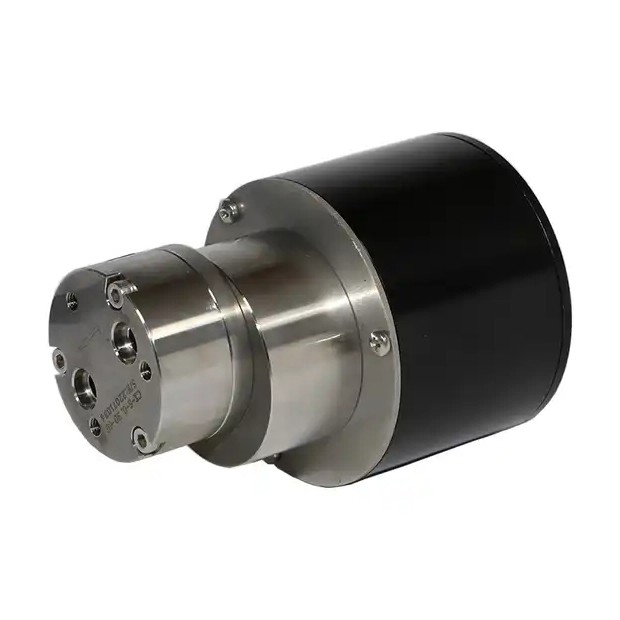

Typically, the flow rate range of internal gear pumps can start from as low as a few milliliters per minute for small, precision applications. These are often used in things like laboratory equipment or small-scale industrial processes where precise dosing of fluids is required. For example, in some chemical injection systems, you need to add a very specific amount of a chemical into a process stream, and a low-flow internal gear pump can do the job perfectly.
On the other end of the spectrum, large industrial internal gear pumps can have flow rates in the hundreds or even thousands of liters per minute. These pumps are used in heavy-duty applications such as oil refineries, where they need to transfer large volumes of crude oil or refined products. They're also common in the marine industry for fuel transfer and lubrication systems on large ships.
Let's talk a bit more about the different types of internal gear pumps and how their flow rate ranges might differ.
Lubrication Gear Pump
A Lubrication Gear Pump is designed to provide a steady supply of lubricating oil to various machine components. These pumps usually have a moderate flow rate range. They need to deliver enough oil to keep the moving parts well-lubricated but not so much that it causes excessive waste or creates other problems. Flow rates for lubrication gear pumps can typically range from around 1 to 100 liters per minute, depending on the size of the machinery they're serving. For smaller engines or industrial equipment, a lower flow rate might be sufficient, while larger machines with more complex lubrication requirements will need a pump with a higher flow rate.
High Temperature Gear Pump
High Temperature Gear Pumps are built to handle fluids at elevated temperatures. The flow rate range of these pumps can be similar to that of regular internal gear pumps, but there are some considerations. At high temperatures, the viscosity of the fluid can change, which can affect the pump's performance. In general, these pumps can have flow rates ranging from a few liters per minute for small, high-temperature processes to several hundred liters per minute for large-scale industrial applications like in the petrochemical industry, where they might be used to transfer hot oils or other high-temperature fluids.
Micropump Gear Pump
Micropump Gear Pumps are all about precision and low flow rates. These pumps are used in applications where you need to move very small amounts of fluid accurately. Their flow rate range can be as low as 0.01 milliliters per minute up to a few milliliters per minute. They're commonly used in medical devices, such as insulin pumps or drug delivery systems, where precise dosing is critical.
When choosing an internal gear pump for your application, it's important to consider the required flow rate carefully. You don't want to oversize the pump, as that can lead to higher energy consumption and unnecessary costs. On the other hand, undersizing the pump can result in insufficient fluid transfer, which can cause problems in your process.
Here are some tips to help you determine the right flow rate for your needs:
- Understand your process requirements: Know exactly how much fluid you need to move in a given time. Consider factors like the volume of the system, the rate at which the fluid is consumed or used, and any specific flow rate requirements of the equipment downstream.
- Account for viscosity: If you're dealing with a thick or viscous fluid, you might need a pump with a higher flow rate to ensure proper transfer. Viscosity can also affect the pump's efficiency, so it's important to choose a pump that can handle the specific viscosity of your fluid.
- Consider future expansion: If there's a possibility that your process might grow or change in the future, it's a good idea to choose a pump with a slightly higher flow rate capacity than you currently need. This can save you from having to replace the pump later on.
As a supplier of internal gear pumps, we have a wide range of pumps available to meet different flow rate requirements. Whether you need a small, low-flow pump for a precision application or a large, high-capacity pump for an industrial process, we've got you covered. Our team of experts can help you select the right pump for your specific needs and provide you with all the support you need during installation and operation.
If you're in the market for an internal gear pump and want to learn more about our products or discuss your requirements, don't hesitate to reach out. We're here to help you find the perfect solution for your fluid transfer needs.
References
- "Positive Displacement Pumps: Fundamentals and Applications" by Heinz P. Bloch and Fred K. Geitner
- "Handbook of Industrial Engineering" edited by Gavriel Salvendy