

What are the modifications needed for a spur gear pump to work in a high - pressure system?
Spur gear pumps are widely used in various industrial applications due to their simplicity, reliability, and cost - effectiveness. However, when it comes to high - pressure systems, these pumps often require certain modifications to ensure optimal performance and longevity. As a spur gear pump supplier, I have extensive experience in understanding the requirements for adapting these pumps to high - pressure environments. In this blog, I will discuss the key modifications needed for a spur gear pump to work effectively in a high - pressure system.
1. Material Selection
One of the primary considerations for high - pressure applications is the choice of materials. In a standard spur gear pump, the gears and other components are typically made from materials that are suitable for normal operating pressures. However, in a high - pressure system, these materials may not be able to withstand the increased stress.
For the gears, high - strength alloys such as case - hardened steel or stainless steel are often preferred. These materials have excellent wear resistance and can handle the high contact stresses generated during high - pressure operation. The housing of the pump also needs to be made from a material with high mechanical strength. Cast iron or forged steel are common choices for high - pressure spur gear pump housings as they can resist deformation under pressure.
The bearings in a high - pressure spur gear pump also play a crucial role. They need to be able to support the increased radial and axial loads. High - quality roller bearings or needle bearings are often used instead of plain bearings. These bearings can handle the high - speed and high - load conditions associated with high - pressure operation.
2. Gear Design Modifications
The design of the gears in a spur gear pump needs to be optimized for high - pressure applications. One of the key aspects is the tooth profile. A modified tooth profile can help to reduce the contact stress between the gears. For example, a double - helical or herringbone gear design can be used instead of a standard spur gear design. These designs distribute the load more evenly across the gear teeth, reducing the risk of tooth breakage and wear.
The gear ratio also needs to be carefully considered. In a high - pressure system, a lower gear ratio may be preferred to reduce the torque requirements and the stress on the gears. Additionally, the number of teeth on the gears can be adjusted to optimize the flow characteristics and the pressure - generating capacity of the pump.
3. Sealing and Leakage Prevention
In a high - pressure system, leakage is a major concern. Any leakage can not only reduce the efficiency of the pump but also pose a safety hazard. Therefore, the sealing system of the spur gear pump needs to be upgraded.
The shaft seals are critical components in preventing leakage. High - pressure lip seals or mechanical seals are commonly used in high - pressure spur gear pumps. These seals are designed to withstand the high pressures and the high - speed rotation of the pump shaft. They are made from materials such as nitrile rubber, fluorocarbon rubber, or carbon - ceramic composites, which have excellent sealing properties and chemical resistance.
The housing joints also need to be properly sealed. Gaskets made from high - strength materials such as copper or graphite can be used to ensure a tight seal between the housing components. Additionally, the housing may be designed with O - ring grooves to provide an extra layer of sealing.

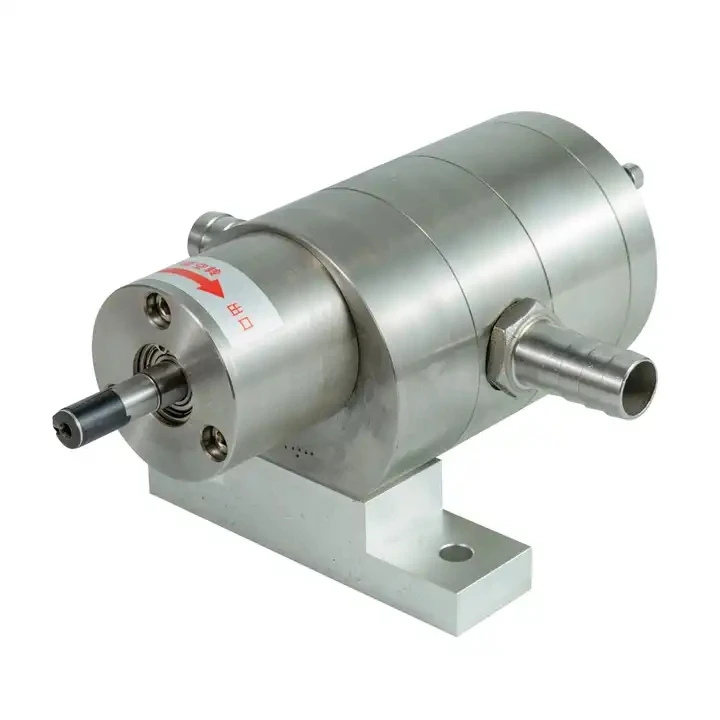
4. Pressure Relief and Control
To protect the pump and the system from over - pressurization, a pressure relief valve is an essential component in a high - pressure spur gear pump. The pressure relief valve is set to open at a predetermined pressure, allowing the excess fluid to bypass the pump and return to the reservoir.
In addition to the pressure relief valve, a pressure control system can be installed to regulate the output pressure of the pump. This can be achieved through the use of a variable - displacement pump or a pressure - compensating valve. These systems can adjust the pump's output based on the system's pressure requirements, ensuring stable and efficient operation.
5. Lubrication System Upgrades
Proper lubrication is essential for the smooth operation of a high - pressure spur gear pump. In a high - pressure system, the lubrication requirements are more demanding.
The lubricant needs to have a high viscosity to provide sufficient film thickness between the moving parts. High - viscosity gear oils are commonly used in high - pressure spur gear pumps. These oils can withstand the high pressures and temperatures generated during operation.
The lubrication system may also need to be upgraded. A forced - lubrication system can be installed to ensure that all the critical components, such as the gears and bearings, are adequately lubricated. This can involve the use of an oil pump to circulate the lubricant through the pump and a filter to remove any contaminants.
6. Cooling System
High - pressure operation generates a significant amount of heat, which can affect the performance and lifespan of the pump. Therefore, a cooling system may be required for a spur gear pump in a high - pressure system.
An external cooling jacket can be installed around the pump housing. This jacket allows coolant, such as water or a coolant fluid, to circulate and remove the heat generated by the pump. Additionally, the lubricant can also be cooled using an oil cooler. This helps to maintain the optimal operating temperature of the pump and prevents thermal damage to the components.
Conclusion
Modifying a spur gear pump for high - pressure systems requires a comprehensive approach that addresses various aspects such as material selection, gear design, sealing, pressure control, lubrication, and cooling. By making these modifications, the pump can operate reliably and efficiently in high - pressure environments.
As a spur gear pump supplier, we have the expertise and resources to provide customized solutions for high - pressure applications. Whether you need a High Pressure Gear Pump, a High Viscosity Gear Pump, or an Aluminium Gear Pump, we can work with you to ensure that the pump meets your specific requirements.
If you are interested in our products or have any questions about adapting spur gear pumps for high - pressure systems, please feel free to contact us for procurement and further discussions.
References
- Block, S. R., & Schmid, S. R. (2010). Hydraulic Pump Handbook. McGraw - Hill.
- Merritt, H. E. (1967). Hydraulic Control Systems. John Wiley & Sons.
- Thoma, D. J. (2004). Fluid Power with Applications. Prentice Hall.