

How does a precision gear pump ensure high - precision fluid delivery?
Precision gear pumps are essential components in various industries where high-precision fluid delivery is crucial. As a trusted supplier of precision gear pumps, I understand the importance of ensuring that these pumps can meet the exacting requirements of our customers. In this blog post, I will delve into the mechanisms and features that enable a precision gear pump to achieve high-precision fluid delivery.
1. Fundamental Working Principle of Precision Gear Pumps
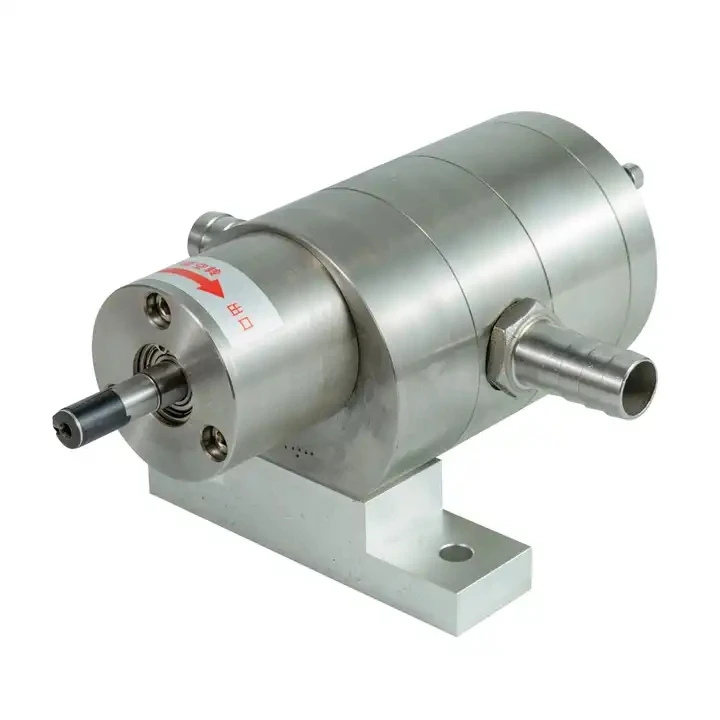
At the heart of a precision gear pump lies a simple yet effective working principle. A typical gear pump consists of two meshing gears - a driving gear and a driven gear. When the driving gear is rotated by an external power source, it causes the driven gear to rotate in the opposite direction. As the gears rotate, they create expanding cavities at the inlet side of the pump. This expansion reduces the pressure in the inlet area, allowing fluid to be drawn into the pump.
Once the fluid is trapped between the teeth of the gears and the pump housing, it is carried around the periphery of the gears to the outlet side of the pump. At the outlet, the meshing of the gears causes the cavities to contract, increasing the pressure and forcing the fluid out of the pump. This continuous cycle of fluid intake, transport, and discharge is what enables the pump to deliver fluid.
The precision in this process comes from the tight tolerances between the gear teeth and the pump housing. These tight tolerances minimize internal leakage, which is the flow of fluid from the high-pressure side of the pump back to the low-pressure side. By reducing internal leakage, the pump can maintain a consistent flow rate and pressure, which are essential for high-precision fluid delivery.
2. Gear Design and Manufacturing Precision
The design and manufacturing of the gears themselves play a critical role in ensuring high-precision fluid delivery. Precision gear pumps often use gears with specific tooth profiles, such as involute or cycloidal profiles. These profiles are designed to provide smooth and continuous meshing between the gears, which helps to reduce noise, vibration, and wear.
In addition to the tooth profile, the size and shape of the gears are also carefully engineered. The gears must be precisely machined to ensure that they have the correct pitch, diameter, and width. Any deviation from the design specifications can lead to variations in the flow rate and pressure of the pump.
For example, if the gears are too small, the pump may not be able to deliver the required volume of fluid. On the other hand, if the gears are too large, they may cause excessive friction and wear, which can reduce the efficiency and lifespan of the pump. Therefore, advanced manufacturing techniques, such as CNC machining and grinding, are often used to produce gears with extremely high precision.
3. Material Selection for High Precision
The choice of materials for the gears and other components of the pump is another important factor in ensuring high-precision fluid delivery. The materials must be able to withstand the pressure, temperature, and chemical properties of the fluid being pumped.
For example, in applications where the fluid is highly corrosive, such as in the chemical industry, the gears may be made from materials such as stainless steel or ceramic. These materials are resistant to corrosion and can maintain their dimensional stability over time.
In applications where the fluid has a high viscosity, such as in the food or pharmaceutical industries, the gears may be made from materials with low friction coefficients, such as PTFE or nylon. These materials can reduce the resistance to fluid flow and improve the efficiency of the pump.
In addition to the gears, the pump housing and other components must also be made from materials that can provide a high level of precision. The housing must be rigid enough to maintain its shape under pressure, and the seals and bearings must be able to prevent leakage and ensure smooth operation.
4. Advanced Control Systems
Many modern precision gear pumps are equipped with advanced control systems that can further enhance the precision of fluid delivery. These control systems can monitor and adjust the pump's performance in real-time, based on factors such as the flow rate, pressure, and temperature of the fluid.
For example, some pumps are equipped with flow sensors that can measure the actual flow rate of the fluid. If the measured flow rate deviates from the desired setpoint, the control system can adjust the speed of the pump motor to correct the flow rate. This closed-loop control system ensures that the pump can deliver fluid with a high degree of accuracy, even under varying operating conditions.
In addition to flow control, some pumps also have pressure control systems. These systems can maintain a constant pressure at the outlet of the pump, regardless of changes in the flow rate or the resistance of the piping system. This is particularly important in applications where a consistent pressure is required, such as in hydraulic systems.
5. Applications of Precision Gear Pumps
Precision gear pumps are used in a wide range of applications where high-precision fluid delivery is required. Some of the common applications include:
-
Chemical Processing: In the chemical industry, precision gear pumps are used to transfer and meter various chemicals with high accuracy. They can handle corrosive and viscous fluids, and their precise flow control ensures that the correct amount of chemicals is added to the process. For more information on pumps suitable for chemical applications, you can check out our High Viscosity Gear Pump.
-
Food and Beverage: In the food and beverage industry, precision gear pumps are used to pump ingredients such as oils, syrups, and creams. They are designed to meet strict hygiene standards and can provide a gentle and precise transfer of fluids, ensuring the quality and consistency of the final product. Our Small Gear Pump for Oil is a great option for such applications.
-
Pharmaceutical: In the pharmaceutical industry, precision gear pumps are used for drug manufacturing, where accurate dosing and delivery of fluids are critical. They can handle sensitive and high-value fluids with minimal contamination, ensuring the safety and efficacy of the drugs.
-
Hydraulic Systems: In hydraulic systems, precision gear pumps are used to provide the high-pressure fluid needed to operate hydraulic cylinders and motors. Their ability to maintain a constant pressure and flow rate is essential for the smooth and efficient operation of the hydraulic system. Our Helical Gear Pump is well-suited for hydraulic applications.

6. Importance of Regular Maintenance
To ensure that a precision gear pump continues to provide high-precision fluid delivery over its lifespan, regular maintenance is essential. Maintenance tasks include checking the pump for wear and damage, replacing worn parts, and lubricating the moving components.
Regular inspection of the gears, housing, and seals can help to identify any potential problems before they cause a significant decrease in performance. For example, if the gears show signs of excessive wear, they may need to be replaced to maintain the tight tolerances required for high-precision fluid delivery.
Lubrication is also important to reduce friction and wear between the moving parts of the pump. The type and frequency of lubrication depend on the specific pump design and the operating conditions.
7. Conclusion and Call to Action
In conclusion, a precision gear pump ensures high-precision fluid delivery through a combination of tight tolerances, precise gear design and manufacturing, high-quality materials, advanced control systems, and regular maintenance. These features make precision gear pumps a reliable choice for a wide range of applications where accurate fluid delivery is crucial.
If you are in need of a precision gear pump for your specific application, we are here to help. As a leading supplier of precision gear pumps, we offer a wide range of products that can meet your requirements. Our team of experts can provide you with professional advice and support to ensure that you choose the right pump for your needs. Contact us today to start a procurement discussion and find the perfect solution for your fluid delivery needs.
References
- Karassik, I. J., Messina, J. P., Cooper, P. T., & Heald, C. C. (2008). Pump Handbook. McGraw-Hill Professional.
- Stepanoff, A. J. (1957). Centrifugal and Axial Flow Pumps: Theory, Design, and Application. John Wiley & Sons.
- Hydraulic Institute. (2012). ANSI/HI 1.1 - 1.2 Rotodynamic Pumps - Design and Application.