

Can an Orbital Steering Motor be used in a closed - loop control system?
Can an Orbital Steering Motor be used in a closed - loop control system?
In the realm of hydraulic systems, the application of orbital steering motors has witnessed a significant expansion over the years. As a leading supplier of Orbital Steering Motor, I am often posed with the question: Can an orbital steering motor be used in a closed - loop control system? This blog post aims to delve deep into this topic, exploring the technical aspects, advantages, challenges, and practical applications of integrating orbital steering motors into closed - loop control systems.
Understanding Orbital Steering Motors
Orbital steering motors are a type of hydraulic motor that operates on the principle of orbital motion. They are known for their compact design, high torque output at low speeds, and excellent controllability. These motors typically consist of a gerotor set, which converts hydraulic pressure into mechanical rotation. The gerotor set comprises an inner gear and an outer gear, and as hydraulic fluid is pumped into the motor, the interaction between the gears creates an orbital motion that results in the rotation of the output shaft.
Steering Orbital Motor are widely used in various industries, including agriculture, construction, material handling, and marine. They are commonly employed in steering systems of vehicles and equipment, where precise control of the steering angle is required.
Closed - Loop Control Systems: An Overview
A closed - loop control system is a control system that uses feedback to regulate the output of a process. In a closed - loop system, the output is continuously measured, and the measured value is compared to a desired setpoint. Any difference between the measured value and the setpoint, known as the error, is used to adjust the input to the system in order to minimize the error and bring the output closer to the setpoint.
Closed - loop control systems offer several advantages over open - loop systems, including improved accuracy, better stability, and the ability to compensate for disturbances and changes in the system. They are commonly used in applications where precise control is required, such as robotics, automation, and aerospace.
Feasibility of Using Orbital Steering Motors in Closed - Loop Control Systems
The short answer is yes, an orbital steering motor can be used in a closed - loop control system. In fact, the characteristics of orbital steering motors make them well - suited for such applications. Here are some of the reasons:
- Precise Control: Orbital steering motors offer excellent controllability, which is essential for closed - loop control systems. The output speed and torque of the motor can be accurately regulated by adjusting the flow rate and pressure of the hydraulic fluid. This allows for precise control of the steering angle or other parameters in the system.
- High Torque at Low Speeds: Orbital steering motors can generate high torque at low speeds, which is beneficial for applications that require slow and precise movements. In a closed - loop control system, this characteristic enables the motor to respond quickly to changes in the setpoint and maintain the desired output.
- Compact Design: The compact design of orbital steering motors makes them easy to integrate into existing systems. This is particularly important in applications where space is limited, such as in small vehicles and equipment.
Components of a Closed - Loop Control System with an Orbital Steering Motor
To use an orbital steering motor in a closed - loop control system, several components are required:
- Orbital Steering Motor: This is the actuator that converts hydraulic energy into mechanical motion.
- Sensor: A sensor is used to measure the output of the system, such as the steering angle or the position of the motor shaft. Common types of sensors used in closed - loop control systems include potentiometers, encoders, and gyroscopes.
- Controller: The controller is the brain of the closed - loop control system. It receives the measured value from the sensor, compares it to the setpoint, and calculates the error. Based on the error, the controller generates a control signal that is sent to the hydraulic valve to adjust the flow rate and pressure of the hydraulic fluid supplied to the motor.
- Hydraulic Valve: The hydraulic valve is used to control the flow rate and pressure of the hydraulic fluid supplied to the orbital steering motor. It is typically an electro - hydraulic valve that can be controlled by the controller.
Advantages of Using Orbital Steering Motors in Closed - Loop Control Systems
- Improved Accuracy: By using feedback from the sensor, the closed - loop control system can continuously adjust the operation of the orbital steering motor to ensure that the output matches the setpoint. This results in improved accuracy and repeatability of the steering angle or other controlled parameters.
- Enhanced Stability: Closed - loop control systems are more stable than open - loop systems because they can compensate for disturbances and changes in the system. For example, if there is a sudden change in the load on the motor, the closed - loop control system can adjust the flow rate and pressure of the hydraulic fluid to maintain the desired output.
- Increased Efficiency: The precise control offered by the closed - loop control system allows the orbital steering motor to operate more efficiently. The motor can be adjusted to operate at the optimal speed and torque for the given load, resulting in reduced energy consumption and longer motor life.
Challenges and Considerations
While using orbital steering motors in closed - loop control systems offers many advantages, there are also some challenges and considerations that need to be addressed:
- Sensor Accuracy: The accuracy of the sensor is crucial for the performance of the closed - loop control system. Any errors or noise in the sensor readings can lead to inaccurate control of the motor. Therefore, it is important to choose a high - quality sensor with appropriate accuracy and resolution.
- Controller Tuning: The controller needs to be properly tuned to ensure optimal performance of the closed - loop control system. This involves adjusting the control parameters, such as the proportional, integral, and derivative gains, to achieve the desired response time, stability, and accuracy.
- Hydraulic System Design: The design of the hydraulic system, including the selection of the hydraulic pump, valves, and hoses, can have a significant impact on the performance of the closed - loop control system. The hydraulic system needs to be designed to provide sufficient flow rate and pressure to the orbital steering motor while minimizing pressure losses and leakage.
Practical Applications
There are several practical applications where orbital steering motors are used in closed - loop control systems:
- Automated Guided Vehicles (AGVs): AGVs are used in warehouses and manufacturing facilities for material handling. They require precise steering control to navigate through the facility. Orbital steering motors can be used in the steering system of AGVs, and a closed - loop control system can be implemented to ensure accurate steering and path tracking.
- Robotic Manipulators: Robotic manipulators are used in various industries for tasks such as assembly, welding, and painting. Orbital steering motors can be used to control the joints of the robotic manipulator, and a closed - loop control system can be used to ensure precise positioning and movement of the manipulator.
- Marine Steering Systems: In marine applications, orbital steering motors are commonly used in the steering systems of boats and ships. A closed - loop control system can be used to improve the accuracy and stability of the steering, especially in rough sea conditions.
Conclusion
In conclusion, an orbital steering motor can indeed be used in a closed - loop control system. The characteristics of orbital steering motors, such as precise control, high torque at low speeds, and compact design, make them well - suited for such applications. By integrating an orbital steering motor into a closed - loop control system, several advantages can be achieved, including improved accuracy, enhanced stability, and increased efficiency.
However, the successful implementation of a closed - loop control system with an orbital steering motor requires careful consideration of several factors, such as sensor accuracy, controller tuning, and hydraulic system design.
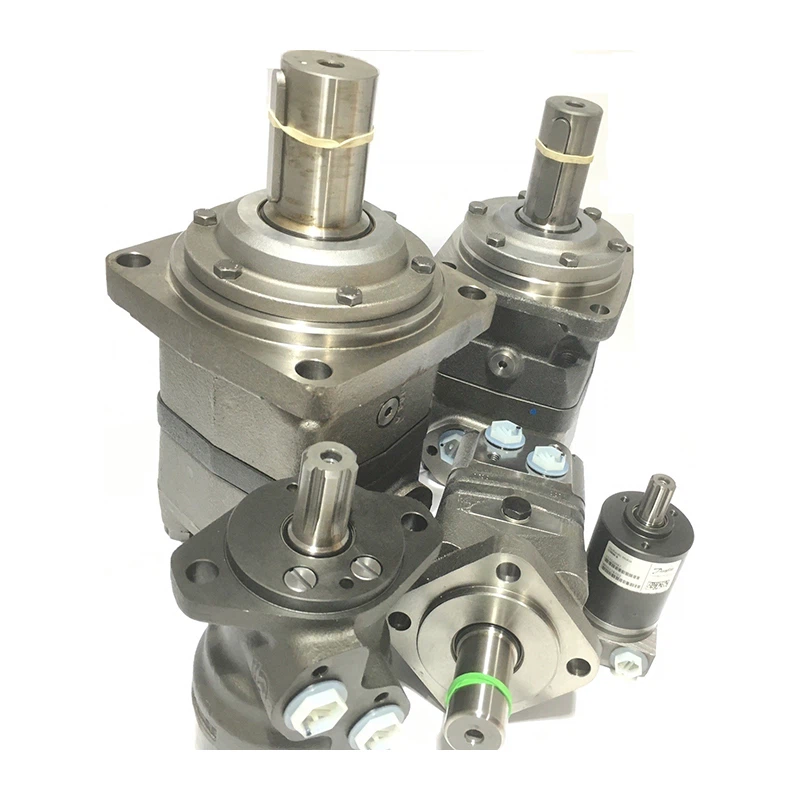

If you are interested in using orbital steering motors in your closed - loop control system or have any questions about our Orbital Hydraulic Steering Motor, please feel free to contact us for a detailed discussion and to explore potential procurement opportunities. We are committed to providing high - quality products and excellent technical support to meet your specific requirements.
References
- Hydraulic Handbook, Eaton Corporation
- Control Systems Engineering, Norman S. Nise
- Industrial Hydraulics, Peter Dyke