

Can an Axial Piston Motor be used in a closed - loop system?
Can an Axial Piston Motor be used in a closed - loop system?
Hey there, folks! As a supplier of Axial Piston Motors, I often get asked whether these motors can be used in a closed - loop system. Well, let's dive right into this topic and break it down for you.

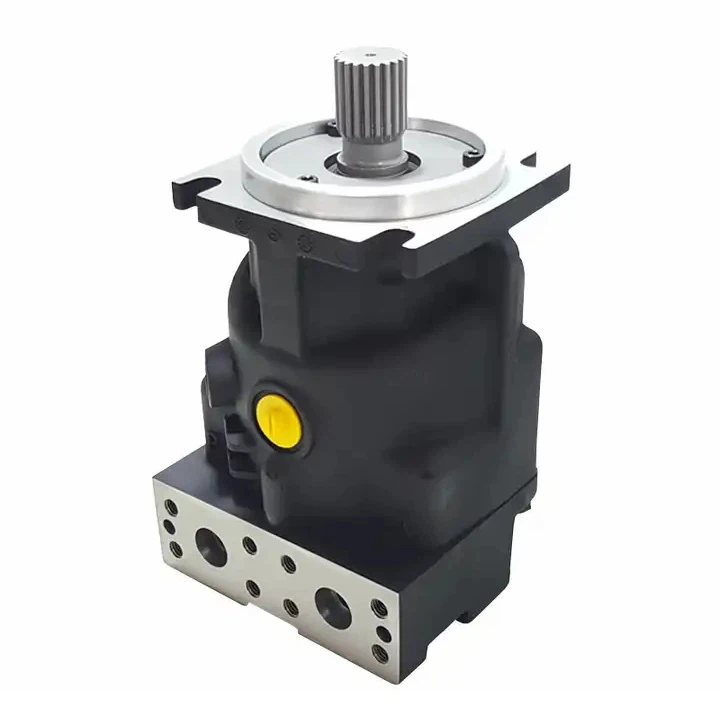
First things first, let's understand what an Axial Piston Motor is. An Axial Piston Motor is a type of hydraulic motor that converts hydraulic energy into mechanical energy. It works by using pistons arranged in an axial pattern within a cylinder block. These motors are known for their high efficiency, high power density, and excellent control characteristics.
What about closed - loop systems? A closed - loop system is a control system where the output of the system is fed back and compared to a desired input. In a hydraulic context, this means that the speed, torque, or position of the motor is constantly monitored and adjusted to meet a specific setpoint. Closed - loop systems are used in applications where precise control is required, such as industrial machinery, mobile equipment, and robotics.
So, can an Axial Piston Motor be used in a closed - loop system? The short answer is yes! In fact, Axial Piston Motors are a great choice for closed - loop systems, and here's why.
Advantages of Using Axial Piston Motors in Closed - Loop Systems
1. High Precision Control
Axial Piston Motors offer excellent control over speed and torque. Their design allows for precise adjustment of the displacement, which in turn affects the motor's output. In a closed - loop system, the feedback mechanism can continuously monitor the motor's speed or torque and make real - time adjustments to keep it at the desired setpoint. For example, in a CNC machine, an Axial Piston Motor can be used to drive the spindle. The closed - loop system can ensure that the spindle rotates at a constant speed, regardless of the load changes, resulting in high - quality machining.
2. High Efficiency
These motors are highly efficient, which is crucial in a closed - loop system. Efficiency means less energy waste, lower operating costs, and less heat generation. In a closed - loop system, the motor needs to operate at optimal efficiency to maintain the stability of the system. Axial Piston Motors can convert a large percentage of the hydraulic energy into mechanical energy, making them a cost - effective choice for long - term operation.
3. Wide Range of Speeds and Torques
Axial Piston Motors can operate over a wide range of speeds and torques. This flexibility makes them suitable for a variety of applications within a closed - loop system. Whether you need a high - speed, low - torque operation or a low - speed, high - torque operation, an Axial Piston Motor can be adjusted to meet your requirements. For example, in a construction equipment like a crane, the motor can operate at different speeds and torques depending on the lifting and moving tasks.
4. Compact Design
Axial Piston Motors have a compact design, which is beneficial in closed - loop systems where space is often limited. They can be easily integrated into the overall system design without taking up too much space. This is especially important in mobile equipment and industrial machinery where a compact and lightweight design is desired.
Considerations when Using Axial Piston Motors in Closed - Loop Systems
1. System Complexity
Closed - loop systems are more complex than open - loop systems. They require additional sensors, controllers, and feedback mechanisms. When using an Axial Piston Motor in a closed - loop system, you need to ensure that all the components are properly integrated and calibrated. Any mismatch or malfunction in the system can lead to poor performance or even system failure.
2. Cost
The cost of implementing a closed - loop system with an Axial Piston Motor can be higher compared to an open - loop system. This is due to the additional components such as sensors, controllers, and the more precise manufacturing requirements of the motor itself. However, the long - term benefits in terms of precision control, efficiency, and productivity often justify the initial investment.
3. Maintenance
Axial Piston Motors in closed - loop systems require regular maintenance. The hydraulic fluid needs to be kept clean and at the right temperature and viscosity. The sensors and controllers also need to be checked and calibrated regularly to ensure accurate operation. Proper maintenance can extend the lifespan of the motor and the overall system.
Comparing with Other Types of Motors
Let's briefly compare Axial Piston Motors with Radial Piston Hydraulic Motors and Hydraulic Piston Motors in the context of closed - loop systems.
Radial Piston Hydraulic Motors are known for their high torque at low speeds. They are often used in applications where extremely high torque is required, such as winches and heavy - duty machinery. While they can also be used in closed - loop systems, their design does not offer the same level of speed control as Axial Piston Motors.
Hydraulic Piston Motors is a broader term that includes both Axial Piston Motors and Radial Piston Hydraulic Motors. Axial Piston Motors, however, are more commonly used in closed - loop systems due to their better speed and torque control characteristics.
In conclusion, Axial Piston Motors are a great option for closed - loop systems. They offer high precision control, high efficiency, and a wide range of operating conditions. Although there are some considerations such as system complexity, cost, and maintenance, the benefits often outweigh the drawbacks.
If you're interested in using Axial Piston Motors in your closed - loop system or have any questions about our products, feel free to reach out for a purchase negotiation. We're here to provide you with the best solutions and support.
References
- Smith, J. (2020). Hydraulic Motors: Principles and Applications. Mechanical Engineering Press.
- Brown, A. (2019). Closed - Loop Control Systems in Industrial Hydraulics. Hydraulic Technology Journal.